
Table of Contents
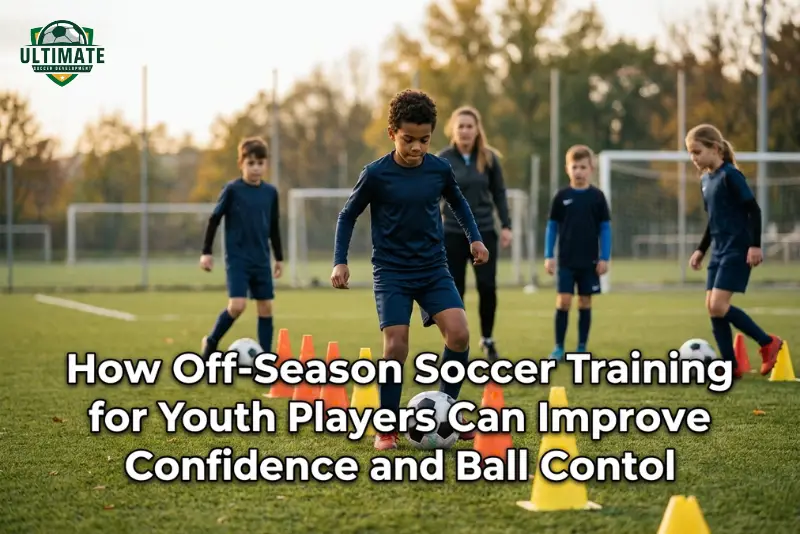
Although the soccer season ends, young players do not have to cease developing themselves as well. The off-season can allow them to heal while still maintaining what are the most relevant skills on the field.
If approached properly, off-season soccer training for youth players can help improve ball control, increase fitness level, and boost confidence prior to the new season’s start. Moreover, it provides an opportunity to concentrate on skills which might not be fully developed due to lack of time in a hectic competition schedule.
Constant training and tough practices are not the objectives here. The ideal training program will involve techniques, physical activities, rests, and many chances to just play the game for fun. All of these initial steps will allow young players to come back to the pitch better prepared.
Why Ball Control Matters for Young Soccer Players
Controlling the ball is one of the first skills that an individual should learn. Once a player feels comfortable with passing, dribbling, and controlling the ball, he or she will be able to make more decisions in a game.
The off season period is additional practice time which is devoid of the pressure of competition. Players will be able to concentrate on their technique and slowly get comfortable with the ball.
- Better first touches
- More controlled dribbling
- Improved passing
- Easier changes of direction
- Greater confidence under pressure
This is why The Importance of Fundamental Soccer Training for Youth in Mississauga is crucial in the process of player development in the long run. Good fundamentals allow young soccer players to build on the skills they have learned.
How Off-Season Training Builds Confidence
Players usually gain confidence through their progress and success in playing soccer. The skills that seemed complicated in the early days of the off-season training become easy for players to perform after several weeks of practicing.
The other factor that enables players to feel confident during their off-season preparation is the fact that they can experiment without having to think about the implications of the actual game. They can attempt a new maneuver, fail, correct themselves, and try again.
A realistic off-season training plan Mississauga families can follow should focus on steady improvement rather than doing as much training as possible.
Skills Youth Players Can Improve in the Off-Season
There are many techniques that young players need to develop between seasons. The concentration of the players on a few skills will make the practice process more effective.
First Touch and Receiving
The effective first touch makes the player more dominant for his subsequent actions. Players can improve their first touch through wall passes and receiving training by moving the ball into the advantageous position rather than just controlling it.
Players should start slowly and focus on clean touches before trying to increase their speed.
Dribbling and Close Ball Control
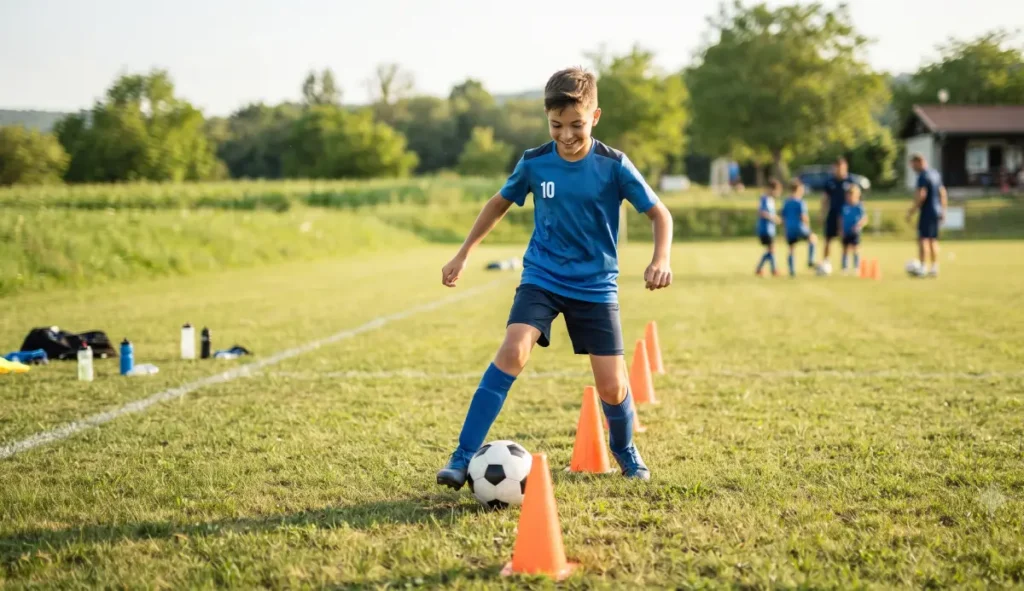
Dribbling practice helps young players become comfortable changing direction and speed while keeping the ball close. Cone drills are useful because they can easily be made easier or more challenging depending on the player’s ability.
Passing and Receiving
Passing against a wall is a simple way to work on accuracy and consistency. Players can gradually introduce one-touch passing and alternate between their stronger and weaker foot.
Shooting and Finishing
Shooting exercises do not need to be limited to just power training. Young players could be working on their positioning, making good contact, shooting accurately and putting the ball in the place that they want it to land.
Weak Foot Exercises
During the game, they often refrain from using their weaker foot. Including five minutes of exercises with the weaker foot during training sessions will make you comfortable using it.
They might sound simple but doing these regularly will make them automatic in game situations. Although this section covers only youth development, players of all ages should practice the same fundamentals. Soccer Training for Adults Mississauga can also be used to help adult players develop their technique and confidence on the pitch.
Simple Drills to Improve Ball Control
Young players do not need a full field or expensive equipment to practice their technique. Many off-season soccer drills at home can be done in a suitable open space with a ball and a few cones or markers.
Ball Mastery
- Inside-outside touches
- Toe taps
- Sole rolls
- Pull-push touches
Dribbling
- Cone dribbling
- Figure-eight movements
- Direction-change drills
- Speed-control exercises
Passing
- Wall passes
- One-touch passing
- Two-touch passing
- Alternating-foot passes
Emphasis needs to be placed on quality as opposed to trying to achieve high repetition numbers. After getting comfortable with the exercise, one may progressively speed things up.
Why Is Consistency Important Rather Than Hours of Practice?
Young players are not required to spend all day practicing. Sometimes, shorter practices might work better and allow keeping soccer fun.
Maintaining one’s soccer fitness during the off season is about much more than running. Technical training, light cardio, movements, and rest might be a part of the plan.
A Simple Off-Season Training Structure
- Technical training: 2–3 sessions per week
- Soccer conditioning: 1–2 sessions per week
- Shooting practice: 1 session per week
- Light activity: As appropriate
- Rest: 1-2 recovery days a week
It will depend on the age, level, fitness and other commitments of the player. It is important to have gradual development without creating any additional physical and mental strain.
How Coaches Can Help Players Gain Confidence
There are cases when a player feels the need for improvement but he/she doesn’t know what to do to improve. Here coaches can help by finding out his/her technical faults, making demonstrations and giving drills corresponding to the player’s current skill level.
Training with Personal Soccer Coach Mississauga players will provide individual training. Coaching will be more concentrated on developing certain skills rather than trying to improve everything at once.
Structured coaching can also help players understand their progress. This connects with Why Structured Soccer Classes Are Key to Youth Development in Mississauga?, particularly for children who benefit from regular instruction and clear goals.
Help Your Young Player Build Confidence This Off-Season
Focused coaching can give youth players extra time to work on ball control, technique, and areas they want to improve. Ultimate Soccer Development Academy offers structured training for players in Mississauga.
Call (647) 880-6121 to learn more about training programs.
Finding the Right Balance Between Training and Rest
The off-season should include recovery. After the rigorous competitive season for young players, there may be a need for some break period from training before beginning the next routine.
Rest will provide the body with sufficient recovery time as well as preventing mental exhaustion. Conditioning for soccer during the off-season must involve maintaining fitness levels without rigorous training on a daily basis.
Signs a Player May Need More Recovery
- Ongoing tiredness
- Losing interest in training
- Persistent soreness
- Difficulty concentrating
- Becoming frustrated with practice
If these signs appear regularly, reducing the training load and allowing more recovery may be appropriate. A balanced Soccer Training Mississauga program should give young players room to improve while also allowing enough time for rest and recovery.
How Parents Can Support Off-Season Development
Parents can encourage development without making every practice about performance. Sometimes simply making time for a child to kick a ball around or play for fun can keep them connected to the sport.
It is also helpful to recognize improvement beyond goals and statistics. A player becoming more comfortable with their weak foot or making better decisions under pressure is meaningful progress.
Families looking for structured opportunities can consider Youth Soccer Training Mississauga programs that give young players regular instruction between seasons.
The mental side of development matters too. Why Mindset Training Is the Missing Piece in Youth Soccer Development emphasizes the need for resilience, patience, and dealing with failure.
When Should Young Athletes Start Preparing for the Upcoming Season?
This depends on each individual player. An athlete that has just completed an exhausting competitive season will require more time to recover than a player who does not have such requirements.
After a proper period of rest, training will become more systematic. With the new season approaching, players can include more conditioning exercises, speed up technical work, and engage in game-like exercises.
For players who want more individual preparation, Private Soccer Training Mississauga can provide focused work on particular technical or physical goals.
Signs Your Child Is Making Progress
Sometimes progress may not be very clear in each session. The most notable progress can sometimes be seen in the comfort level of a player with the ball, especially where the player has ample time to train.
What Progress May Look Like
- A more controlled first touch
- Better passing accuracy
- Improved dribbling
- Greater use of the weaker foot
- Faster decisions with the ball
- More willingness to try unfamiliar skills
- Increased confidence during practice
For families using indoor soccer training winter sessions, progress may also become easier to notice because players have a consistent space to keep practicing when outdoor conditions are not ideal.
These small improvements can show that technical ability and confidence are developing together.
Building Confidence One Touch at a Time
However, the off-season does not always need to be a choice between absolute relaxation and total training. It can provide an opportunity for young soccer players to relax and, at the same time, stay fit and improve their technical skills. The appropriate off-season soccer training for youth will allow accomplishing this goal while maintaining their interest in the sport.
Consistency, proper instruction, and recovery are all equally important aspects that need to be taken into account whether a young soccer player is training alone or under the supervision of a Soccer Academy in Mississauga.
Ultimate Soccer Development Academy provides young soccer players with the opportunity to continue developing their skills with the help of specially developed training programs that will ensure the players’ success.
Would you like to help your children develop further in the off-season? Call Ultimate Soccer Development Academy and learn more about training programs offered by our academy. You may contact us by phone at (647) 880-6121 or by e-mail at Coachkyle@ultimatesoccerdevelopment.ca.