
Table of Contents
Your kid’s got the skills, the touch, the game sense but the second a faster player blows past them on the wing, all of that stops mattering. Sound familiar? Speed is one of those things parents notice immediately but rarely know how to actually train for. With fall club season kicking off across Mississauga right now, this is exactly the point where a lot of players start falling behind simply because speed got skipped in favor of pure skill work.
So let’s actually get into real speed and agility training for soccer players in Mississauga coaches use, and how to build it the right way without wrecking a young athlete’s body in the process.
Why Speed Matters More Than People Realize
Soccer is all about quick explosive movements to control the ball. Being the first to regard a loose ball is more important than being the fastest to cover distance. Soccer is about a lot of turns and first step abilities, so a player who is very technically skillful yet not very fast to react will have losses in possession.
How to Get Faster for Soccer: The Real Building Blocks
If you’re wondering how to get faster for soccer, it’s less about running more and more about training the right qualities:
- Acceleration — how quickly a player reaches top speed from a stop
- Reactive quickness — how fast they respond to a changing situation
- Change of direction — cutting, pivoting, and redirecting without losing balance
- Top-end speed — actual sprint speed once fully accelerated
- Repeated sprint ability — staying fast even after the fifth or sixth sprint of the match
Most youth training focuses too heavily on top-end speed alone, when honestly, acceleration and change of direction matter more in an actual game situation.
Best Age to Start Speed Training Soccer
This is a question we get constantly from parents, and the honest answer is earlier than most people think, just structured very differently by age. Best age to start speed training soccer generally breaks down like this:
Age Range | Focus |
6-9 | Fun-based agility games, coordination, basic movement patterns |
10-12 | Introduction to structured ladder drills, light plyometrics |
13-15 | Explosive speed training youth athletes benefit from, more structured sprint work |
16+ | Full speed and agility programming, sport-specific conditioning |
Younger kids genuinely don’t need formal sprint training. They need fun movement variety that builds the coordination foundation everything else gets built on later.
Ladder Drills Soccer Players Actually Use
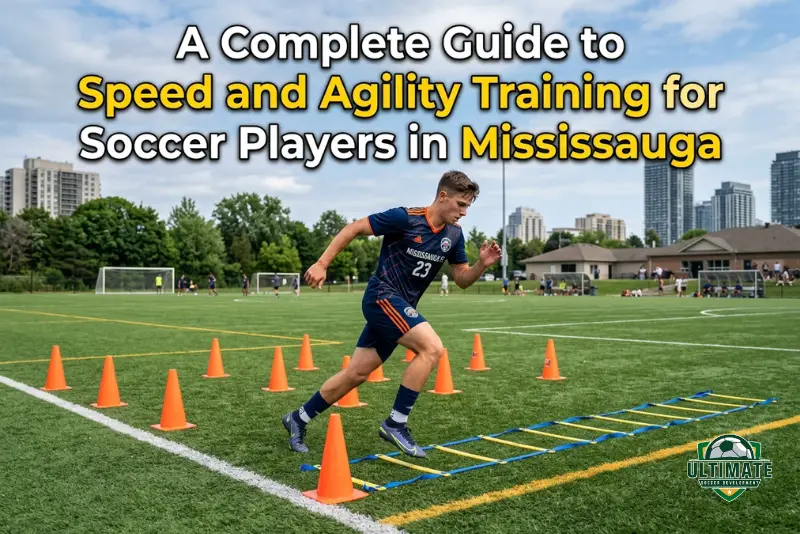
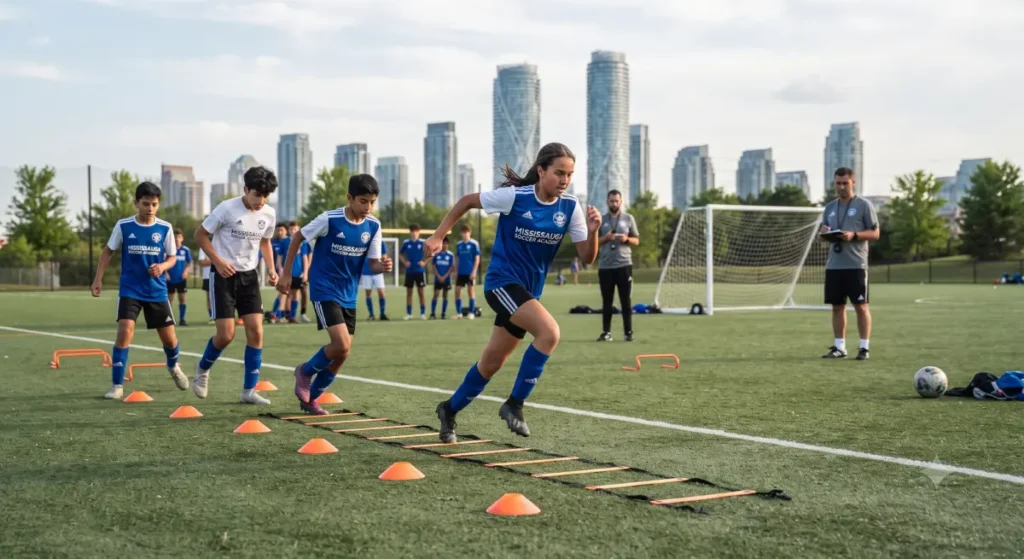
Ladder drills soccer coaches rely on constantly aren’t just for show they build the fast-footwork patterns that translate directly onto the field. A few staples worth knowing:
- Two-feet-in-two-feet-out, for basic coordination and rhythm
- Lateral shuffles through the ladder, mimicking defensive footwork
- In-in-out-out patterns, building quicker foot turnover
- Single-leg hops through each square, for balance and single-leg strength
These drills feel simple, almost too simple, but consistency over weeks is what actually builds the neuromuscular patterns that show up in game speed later.
Help Your Child Build Real Game Speed This Season
The right training now can make a meaningful difference as fall season kicks off.
Agility Drills for Soccer Players Beyond the Ladder
When thinking of drills for developing soccer agility, there is much more than ladder work. Cone drills, competitive shuttle runs, and small-sided games with intense decision making drills all build agility that is clearly evident outside of the controlled drill environment. The best agility work involves the randomness and reactivity of movements that occur within a game and a player’s response to the opponent, rather than running a pre-determined drill.
Soccer Speed Training for Kids: Keeping It Age-Appropriate
Soccer speed training for kids differs from adults, as many parents and coaches unwittingly learn. Young kids don’t respond to intensity loading the way adults do, so forcing them to do high impact drills and intense volumes will cause injury. At best, they will develop no speed at all. Younger athletes have to be conditioned for speed. Pushing for a quick gain in speed is going to increase the risk of injury.
Explosive Speed Training Youth Athletes Can Handle Safely
Once kids reach the young teen years, explosive speed training youth athletes can safely incorporate starts to include more structured elements: short sprints, bounding drills, and controlled plyometric work. The key word here is controlled. Volume and intensity should build gradually over months, not weeks, to avoid overloading still-developing joints and growth plates.
Does Agility Training Actually Reduce Injury Risk?
Genuinely, yes. Athletes with better change-of-direction control and reactive quickness tend to experience fewer non-contact injuries, particularly around the knees and ankles, since their bodies are simply better prepared to absorb and redirect force safely. This is one of the most underrated benefits of speed and agility training for soccer players Mississauga families invest in it’s not just about performance, it’s genuinely protective too.
Soccer Conditioning Mississauga Programs Should Actually Include
Good soccer conditioning Mississauga training goes beyond just running players into the ground. Real conditioning blends aerobic base work with the repeated sprint ability that actually matches what happens during a match: short bursts, brief recovery, repeat, over and over for ninety minutes.
If your child is newer to structured training altogether, it’s worth reading The Importance of Fundamental Soccer Training for Youth in Mississauga first, since speed work builds on top of solid fundamentals, not instead of them.
Building Speed the Right Way
At Ultimate Soccer Development, we’ve seen the difference proper progression makes over the years. Real speed and agility training for soccer players Mississauga families see results from isn’t about cramming drills into a few sessions before tryouts it’s steady, age-appropriate progression that builds real, lasting speed rather than a temporary bump before it fades again.
If you’ve got general questions about how youth training programs are structured overall, know more about Youth Soccer Training in Mississauga: Common FAQs before diving into speed-specific work.
Getting Started This Season
Whatever your child’s current speed level, there’s real room to build from where they are right now. Consistency, age-appropriate loading, and drills that actually translate to game situations matter far more than any single flashy workout.
FAQs
What age should kids start speed and agility training?
How can my child get faster for soccer?
What are the best agility drills for soccer players?
How often should youth athletes do speed training?
Does agility training reduce injury risk in soccer?
Build Real Speed This Season
Ultimate Soccer Development helps young athletes build the speed, agility, and confidence to compete at their best. Contact us today at (647) 880-6121 or email us at Coachkyle@ultimatesoccerdevelopment.ca to schedule an evaluation and get started